Best Vlogging Cameras 2026: Ultimate YouTube Creator Guide
Discover the top vlogging cameras for 2026! Our comprehensive buying guide helps YouTube creators choose the perfect camera for stunning content creation.
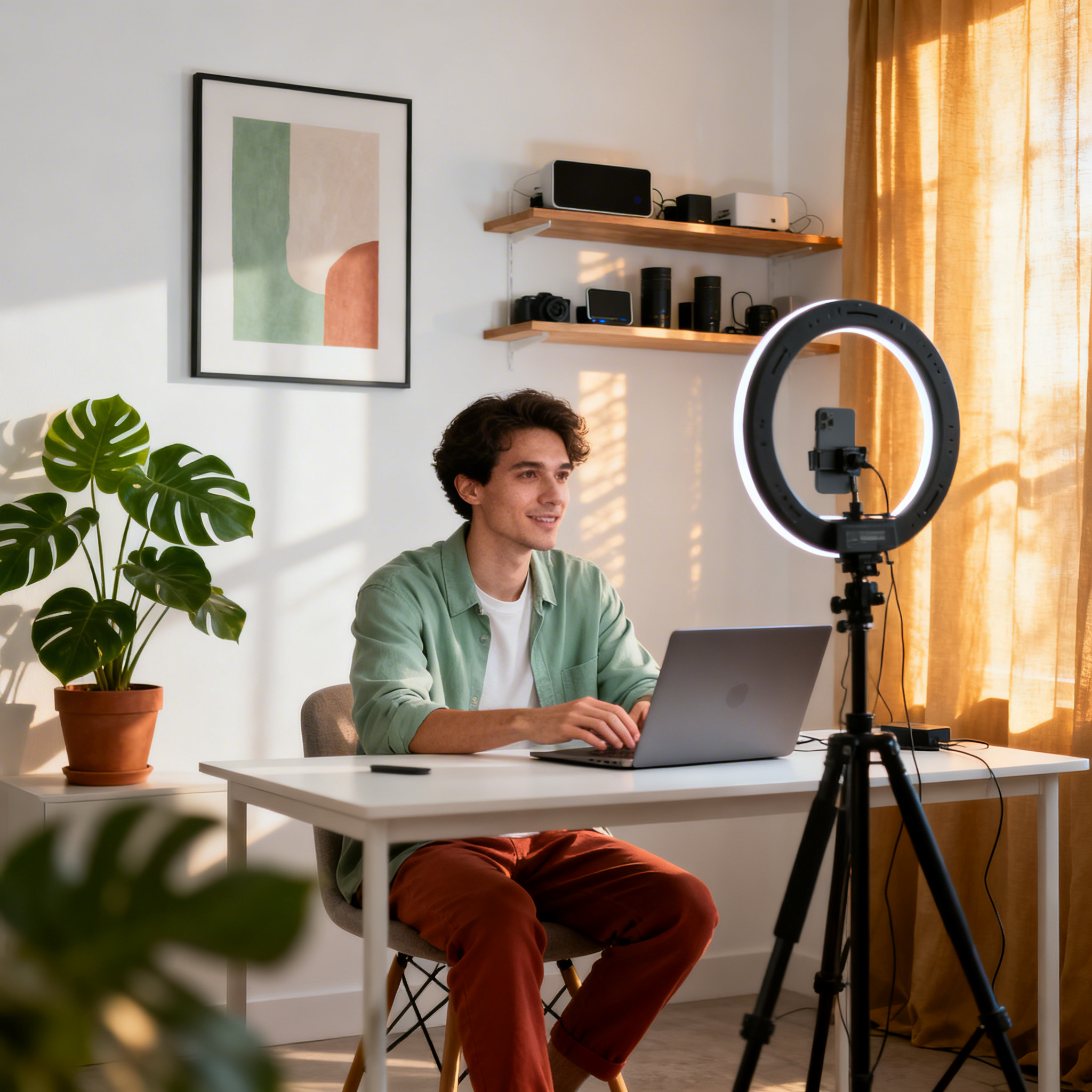
Creating compelling vlogs requires more than just great content—you need a camera that can keep up with your creative vision. Whether you’re just starting your YouTube journey or looking to upgrade your existing setup, choosing the right camera can make or break your content quality. In 2026, vloggers have access to incredibly advanced technology that makes professional-quality content more accessible than ever.
The vlogging landscape has evolved dramatically over the past few years. Today’s successful creators demand cameras that deliver crisp 4K video, reliable autofocus, excellent stabilization, and seamless connectivity for instant sharing. With new features like AI-powered subject tracking, enhanced low-light performance, and improved battery life, modern cameras are specifically designed with content creators in mind.
What Makes a Great Vlogging Camera in 2026
Video Quality and Resolution
Modern vlogging demands high-quality video output, and 4K recording has become the standard rather than the exception. While 1080p content is still acceptable for beginners, investing in 4K capability future-proofs your content and gives you flexibility in post-production. Look for cameras that offer multiple frame rate options, including 60fps for smooth motion and 120fps for slow-motion effects.
The codec quality matters just as much as resolution. Cameras with advanced codecs like H.265 (HEVC) provide better compression without sacrificing quality, allowing you to store more content and upload faster. Some premium models even offer internal recording in professional formats like ProRes, giving you maximum flexibility in color grading and post-production.
Autofocus Performance
Nothing ruins a vlog faster than hunting autofocus or blurry footage when you’re the star of your own show. The latest cameras feature AI-powered autofocus systems that can track eyes, faces, and even specific subjects with remarkable accuracy. Real-time tracking ensures you stay sharp whether you’re moving around, gesturing, or switching between close-ups and wide shots.
Touch-to-focus functionality has become essential for solo creators. Being able to tap your camera’s screen to change focus points quickly allows for dynamic storytelling without needing an assistant behind the camera.
Image Stabilization
Handheld vlogging requires excellent stabilization to maintain professional-looking footage. In-body image stabilization (IBIS) combined with optical stabilization in lenses provides the best results, but digital stabilization has improved significantly and can be sufficient for many creators.
Modern stabilization systems can compensate for walking movement, slight camera shake, and even provide active mode stabilization for more dynamic shooting scenarios. This technology has advanced to the point where gimbals, while still useful, are no longer absolutely necessary for smooth footage.
Flip Screen and User Interface
A fully articulating flip screen isn’t just convenient—it’s essential for solo vlogging. You need to see yourself while recording to ensure proper framing and focus. The best vlogging cameras offer bright, high-resolution screens that remain visible even in direct sunlight.
The user interface should be intuitive and customizable, allowing you to quickly adjust settings without interrupting your creative flow. Quick access to key functions like recording, exposure compensation, and focus modes can make the difference between capturing the perfect moment and missing it entirely.
Battery Life and Power Management
Extended recording sessions demand exceptional battery performance. Look for cameras that offer at least 2-3 hours of continuous recording time. USB-C power delivery has become increasingly important, allowing you to charge while recording or use external battery packs for all-day shooting sessions.
Some cameras now feature intelligent power management that optimizes performance based on your shooting conditions, extending battery life when maximum performance isn’t needed.
Connectivity and Content Sharing
Modern vlogging cameras should offer seamless connectivity options. Built-in Wi-Fi and Bluetooth enable instant image transfer and remote control via smartphone apps. Some advanced models include live streaming capabilities, allowing you to broadcast directly to platforms like YouTube, Instagram, or Twitch without additional equipment.
USB-C connectivity for both charging and data transfer has become the standard, providing faster file transfers and more reliable connections than older USB formats.
Top Camera Recommendations for 2026
Best Overall: Sony A7 IV
The Sony A7 IV continues to dominate the vlogging space with its exceptional balance of features, performance, and value. This full-frame mirrorless camera delivers outstanding video quality with advanced autofocus capabilities that make it perfect for solo content creation.
Key Features:
- 33MP full-frame sensor with excellent low-light performance
- 4K 60p recording with 10-bit internal recording
- Real-time Eye AF for humans and animals
- 5-axis in-body image stabilization
- Fully articulating touchscreen LCD
- Dual card slots for backup recording
- USB-C power delivery and charging
Why It’s Great for Vlogging: The A7 IV excels in real-world vlogging scenarios with its reliable face detection autofocus that locks onto your eyes and tracks them seamlessly as you move. The camera’s low-light performance is exceptional, making it perfect for indoor content or golden hour shooting. The fully articulating screen flips out to the side, making it easy to monitor your framing while recording.
The camera’s menu system, while complex, offers extensive customization options that allow you to set up the camera exactly how you prefer. Battery life is solid, typically lasting 2-3 hours of continuous recording, and the USB-C charging means you can power the camera indefinitely with the right setup.
| Specification | Details |
|---|---|
| Sensor | 33MP Full-Frame CMOS |
| Video Recording | 4K 60p, 1080p 120p |
| Autofocus Points | 759 phase-detection |
| Screen | 3.0” Fully Articulating Touchscreen |
| Battery Life | ~610 shots (CIPA rated) |
| Weight | 658g (body only) |
| Price Range | $2,500-2,800 |
Best for Beginners: Canon EOS M50 Mark II
For creators just starting their vlogging journey, the Canon EOS M50 Mark II offers an excellent entry point with professional features at an accessible price. This compact mirrorless camera provides great video quality and user-friendly operation that won’t overwhelm newcomers.
The M50 Mark II features Canon’s excellent Dual Pixel autofocus system, which provides smooth and reliable focusing during video recording. The camera’s guided menu system helps beginners understand various settings and their effects, making it an educational tool as well as a creation device.
While the camera crops the sensor during 4K recording, the resulting footage is still excellent for most vlogging applications. The 1080p mode offers no crop and includes digital stabilization, making it perfect for handheld use.
Best Compact Option: Sony ZV-1
Designed specifically for vlogging and content creation, the Sony ZV-1 packs impressive technology into an incredibly portable package. This camera prioritizes ease of use and automatic operation, allowing creators to focus on content rather than technical settings.
The ZV-1 features a built-in ND filter, which is unusual for compact cameras and incredibly useful for controlling exposure in bright conditions. The camera’s Product Showcase setting automatically shifts focus from your face to objects you hold up to the camera, perfect for unboxing videos or product reviews.
Audio quality is surprisingly good thanks to the directional microphone with wind screen, though serious creators will still want to invest in external audio solutions.
Best Budget Option: Canon EOS Rebel T8i
For creators working with tight budgets, the Canon EOS Rebel T8i (also known as 850D) offers excellent value with strong video capabilities. While it’s technically a DSLR, the camera’s live view autofocus performance is excellent for video recording.
The T8i includes Canon’s latest Dual Pixel autofocus system with eye detection, making it surprisingly capable for solo vlogging. The fully articulating screen and intuitive menu system make it user-friendly for beginners, while the large selection of affordable Canon EF-S lenses provides room for growth.
Battery life is exceptional compared to mirrorless alternatives, often lasting entire day of shooting without needing to swap batteries.
Best Premium Option: Sony FX3
For professional creators or those with larger budgets, the Sony FX3 represents the pinnacle of vlogging camera technology. Originally designed as a compact cinema camera, the FX3 offers professional video features in a body that’s still manageable for solo creators.
The camera’s full-frame sensor provides exceptional low-light performance and beautiful depth of field control. Advanced features like S-Log recording, dual base ISO, and professional audio inputs make it suitable for high-end content creation.
The FX3’s unique form factor includes a top handle with audio controls and a fan for extended recording sessions, addressing common issues that plague other cameras during long recording sessions.
Budget Considerations and Value Propositions
Entry-Level ($300-800)
At this price point, you’re looking at older generation cameras or entry-level models that can still produce quality content. Cameras like the Canon EOS M50 (original version) or Sony ZV-1F offer solid 1080p recording with good autofocus systems.
These cameras typically compromise on low-light performance, battery life, or advanced features, but they’re perfect for creators testing the waters or working with strict budget constraints. Many successful YouTubers started with similar equipment and upgraded as their channels grew.
Mid-Range ($800-2000)
This sweet spot offers the best balance of features and value for most creators. Cameras in this range typically include 4K recording, excellent autofocus systems, good low-light performance, and professional features that can grow with your channel.
The investment at this level often pays for itself through better content quality and increased efficiency in creation and post-production workflows.
Premium ($2000+)
Professional-grade cameras in this category offer the latest technology, exceptional build quality, and advanced features that can handle any creative challenge. These cameras typically excel in low-light situations, offer professional recording formats, and include advanced connectivity options.
While not necessary for all creators, the investment can be worthwhile for full-time content creators or those producing commercial work alongside their YouTube content.
Essential Accessories for Vlogging Success
Audio Equipment
Great audio is crucial for successful vlogs, and your camera’s built-in microphone likely won’t suffice for professional results. Consider investing in:
- Rode VideoMic Pro+: Excellent on-camera microphone with advanced features
- Wireless Lavalier Systems: Perfect for hands-free recording and interviews
- Audio Recorders: For the highest quality audio recording separate from video
Lighting Solutions
Proper lighting can transform your content quality dramatically:
- LED Panel Lights: Portable and adjustable for various shooting conditions
- Ring Lights: Perfect for beauty content and close-up talking head shots
- Softboxes: Create professional-looking soft light for studio setups
Stabilization and Support
Even cameras with excellent built-in stabilization benefit from additional support:
- Gimbals: For smooth movement and professional camera movements
- Tripods: Essential for static shots and consistent framing
- Monopods: Provide stability while maintaining mobility
Storage and Power Solutions
Extended shooting sessions require proper power and storage management:
- High-Speed Memory Cards: Ensure reliable 4K recording without dropped frames
- External Battery Packs: Extend shooting time beyond internal battery limitations
- Multi-Battery Chargers: Keep multiple batteries ready for long shooting days
Future-Proofing Your Investment
Emerging Technologies
The camera industry continues to evolve rapidly. Consider future trends when making your investment:
- AI-Enhanced Features: Automatic editing, improved noise reduction, and intelligent scene detection
- Enhanced Connectivity: 5G integration for direct streaming and cloud storage
- Computational Photography: Advanced HDR and low-light performance through software processing
Platform Evolution
Social media platforms continue to change their requirements and preferences:
- Vertical Video Support: Ensure your camera can efficiently shoot in portrait orientation
- Live Streaming Integration: Direct streaming capabilities become increasingly important
- HDR Content: High dynamic range video support for next-generation displays
Conclusion and Final Recommendations
Choosing the best camera for vlogging in 2026 depends heavily on your specific needs, budget, and creative goals. For most creators, the Sony A7 IV represents the ideal balance of features, performance, and value, offering professional-grade video quality with user-friendly operation that works well for solo content creation.
Beginners should seriously consider starting with the Canon EOS M50 Mark II, which provides excellent learning opportunities and room for growth at a reasonable price point. The money saved can be invested in quality audio equipment and lighting, which often impact final video quality more than camera upgrades.
For creators with larger budgets or specific professional requirements, the Sony FX3 offers uncompromising performance and advanced features that can handle any creative challenge you throw at it.
Remember that the best camera is the one you’ll actually use consistently. Consider factors like size, weight, and ease of use alongside technical specifications. A slightly less capable camera that you enjoy using will produce better content than a technically superior model that sits unused because it’s too complex or cumbersome.
Invest in quality audio equipment and lighting alongside your camera choice—these accessories often have more impact on perceived video quality than camera upgrades alone. Start with one quality camera and learn to use it thoroughly before considering upgrades, and always prioritize creating great content over chasing the latest technology.
The vlogging camera market in 2026 offers incredible options at every price point. Choose based on your current needs while keeping an eye toward future growth, and you’ll have a setup that can evolve with your creative journey.
Related Tags
Looking for the Best Camera Deals?
Check out our latest buying guides and comparison articles to find the perfect camera for your needs.
Browse Buying Guides