
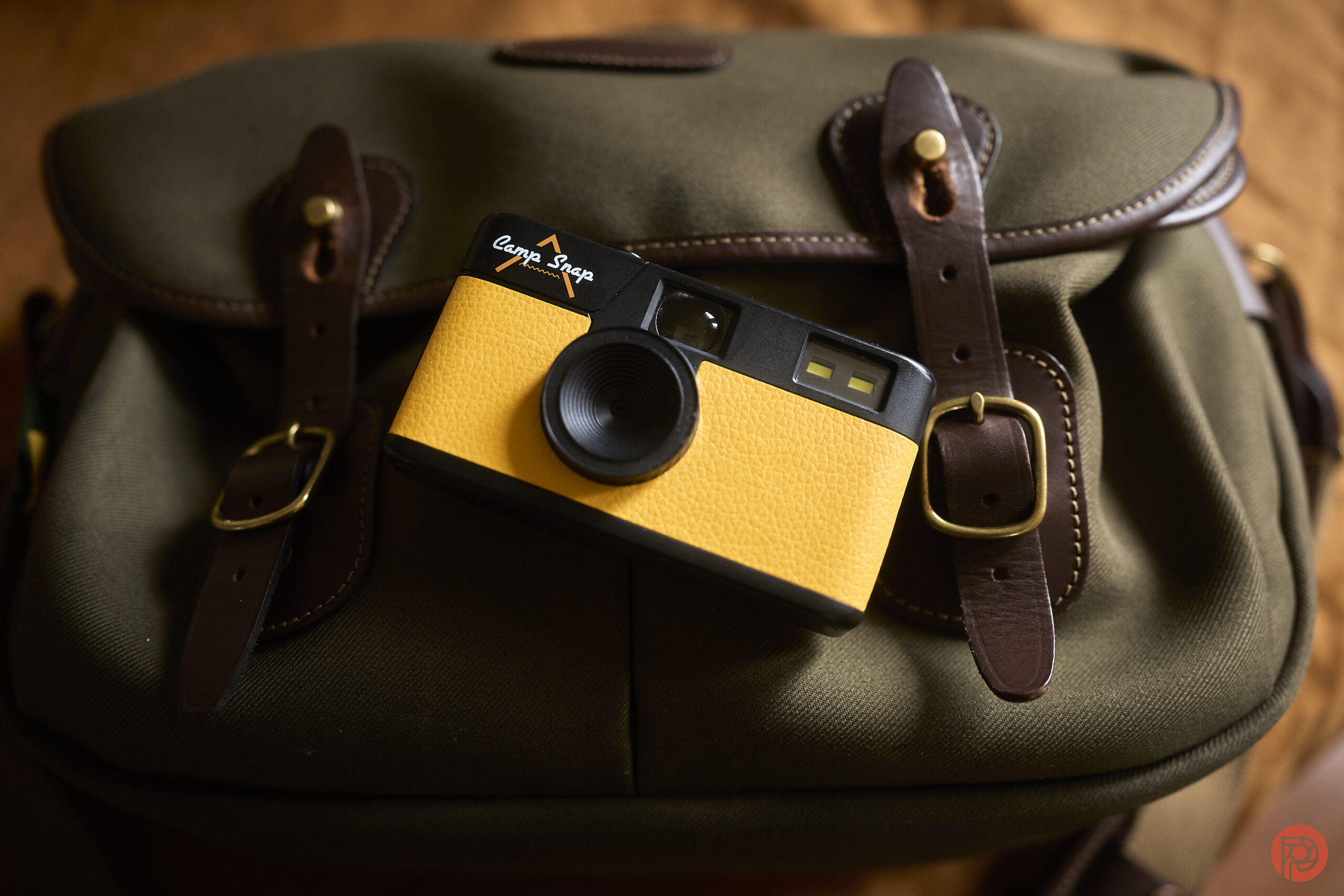
“I don’t know yet,” says Brian Waldman to me after I ask him what’s bringing him joy today. “I had a big breakfast; that was bringing me joy, but then I ate too much.” Brian Waldman is the founder of Camp Snap — a camera company that has popped up in the past few years and that’s challenging the entire Japanese camera industry in the point and shoot sector of the market. After speaking more to one another about joy, life, and how it should be, we get to a point where I’m really struck by something he says.
Additional input for this article was provided by Nilofer Khan.
“There’ll be a time in your life where you’re gonna be like, ‘I spent way too much time being miserable over stupid stuff.’” Brian states during our call. And with that line, I’m put back into the state of mind I’ve had for a few years now. Of any of the Editors of the surviving traditional publications specializing in photography, this line truly resonates with me. I’ve spent way too long being miserable over the fact that every camera and every lens is so much of the same. But it wasn’t only me, I heard all of my staff say so too. With that said, we can lose track of what’s important very easily: holding the brands accountable.
This is one of the reasons why I’ve been so outspoken over the years. If you really look at camera tech, it hasn’t changed since perhaps 2020 all that much. I’ll give you several examples. Brands have steadily been using a variant of a 24MP full-frame sensor for a decade. Autofocus, unless combined with AI scene detection or face detection hasn’t improved much at all. Weather resistance hasn’t changed and nor have the warranties around them. High ISO output is still good beyond ISO 6400 and very usable way even beyond there. If anything, brands have been pushing to add more video features into cameras primarily designed for photographers.
Everything that comes out is all the same more or less — and brands spend lots of money on marketing or control the views of influencers and more all while saying that they often don’t. When that doesn’t work, they turn to places like Reddit. In the past, I’ve read reports about brands hiring out comment farms to disuade the words of anyone who speaks ill of their brand. It’s one of the major reasons why years ago, I turned comments off on the Phoblographer.
What Camp Snap is doing feels significantly more authentic, fun, nostalgic, and hackerish while also not seeming that way. And mostly, they think so differently because they’re not one of the big Japanese companies. To put that into further grasp of reality, they’re not trying to compete with your smartphone because they don’t have that generational trauma attached to them.
For those of you who are DC Comic fans, let’s adopt the idea of Batman and the Bat Family. Nightwing is a variant of Bruce if he had gone to therapy, conquered his trauma and adopted the ideals of Superman. Red Hood, on the other hand, is Bruce if even more trauma came to him. To bring this back to the camera world, I’d say that Brian and the folks at Camp Snap are a lot more like Nightwing in that they’ve overcome the trauma of smartphones and are fundamentally looking to distance themselves from the devices like a person working to drink less and eat better for their heart’s health.
For example, I never knew that you could customize the look of the output of your Camp Snap camera. But you can make your images look more like film by using their Filters website and even purchasing stuff from a brand like CampShades. This is a philosophy that was embraced by brands like Panasonic LUMIX and even Canon after taking influence from Fujifilm. After a while, all the other brands started to do it.
But as I discovered in my conversation with Brian, too many cooks in the kitchen make things get very expensive.
Camp Snap got started because Brian wanted to send his kids to camp with a camera of some sort for them to take pictures of what they did. “One of the main reasons I did this is because we live in such a digital world and it’s really hard to avoid the video games and everything like that,” he says. “So I send my kids to an overnight camp for four weeks where there’s no electronics and they have to socialize like humans did in the past… One of the main rules is no screens at all.” After sending his kids to camp with disposable cameras, he found that they basically just used them to wake their friends up with the flash. So Camp Snap was originally designed to be like a disposable camera for kids that can be reused — and the Micro SD card embedded inside is locked behind a door that you need a screwdriver to get into.
But when he looked at the sales data, he saw lots of Gen Z and Millennials buying them up.
With his latest camera, the Camp Snap 8, Brian regrets not clearly communicating the the engineers that this camera wasn’t designed for kids to bring to camp. So it was designed with the Micro SD card behind a door that requires a screwdriver; and he expressed to me that he regrets that decision.
Since the original launch, Brian tells the Phoblographer that he’s worked on improving the cameras they make over time by including higher end features and using better materials. Since then, it’s been winning awards and press coverage everywhere. And with that success has come the growing pains that every small business faces.
Brian has faced a lot of the issues that even bigger manufacturers face. He’s had supplier chip issues — and that screwed over a lot of his production when he discovered that they wouldn’t be supplying a specific chip anymore that was present in the original Camp Snap camera. So he had to do a slight upgrade. It sounds all too similar to what Ricoh did with their GR series. At the same time, he has been able to make the cameras extremely affordable while keeping the business staff to less than 5 people.
To sustain these low prices, Brian steps in personally. He has an electrical engineering background from college and so he can personally step in to make decisions on how things work with the cameras. “I can read a spec sheet, I can figure out how the firmware works in the cameras. So really it’s the image sensors which are like a fixed cost because Sony basically owns the entire market.” Brian explains. “So if you can find a way to get the processor to do what you need it to do and to integrate with the image sensor, then the rest of it you can do very affordably.” He continues to say that even the processor costs pennies.
Here is where I’ve been intrigued. For the first time in my nearly 20 years of working in the photography world, a manufacturer talks to me more about the processor. Brian gets the processors in some of the cameras from a company called JLing — whose products you can find on eBay.
“… They make inexpensive, older, inexpensive processors for like trail cams and dash cams…So I figured out how to use that processor for the camera,” Brian explains. “Instead of using like the processor in your iPhone, for example.” He cites how the iPhone is also $2,000 worth of technology, while the Camp Snap is far more affordable. These processors can be bought on eBay. If you’re buying in bulk, I’m sure it could come down even further.

For the Camp Snap Pro, Brian is using a processor from a company called iCatch. It’s a similar processor to what’s found in the new Camp Snap 8 — which is designed more for shooting video.
Unfortunately, because the processors all come from Taiwan, Brian states that he’s limited in what he can do. “You basically have to beg, and it takes a lot of time for them to do what you want.” This level of candidness puts a lot into perspective for me — and it sometimes explains why brands often do so many similar things in the camera world. Years ago, when I went on an Olympus press trip, I remember asking a rep about how powerful the processor in the EM1 was compared to the iPhone. And he told me flat out that it was far more powerful. I’m now led to believe that processors mainly come from Taiwan, and the brands purposely don’t tell us more because they’re trying to hide the true costs and therefore charge a lot more money. It’s price gouging in many ways — but where I feel it’s a bit more ethical is with companies like Hasselblad and Leica, where they give you super long warranties and so much more. On top of that, each brand basically calls its processor something different. At this point, I can say with relative certainty that the brands are all using more or less the same processor in the way that they’re all using more or less the same sensors.
Beyond the tech, he’s doing other things to keep costs down. The Camp Snap camera doesn’t have a lot of excessive packaging. If anything, the 4GB memory card stuck into the camera is one of the most expensive things costing around $1.40 per card. And the rest all add up.
If anything, Brian states that acquiring the customer to buy the product is the expensive part of the business. He speaks for a few minutes about the blood, sweat and tears he’s put into the business while having issues like trolls and people calling his products “cheap pieces of garbage,” or even writing a bad review because of issues with the post office.
One of the most refreshing things that Brian tells me is that he’s trying to hire people specifically who understand digital photography. I can’t even begin to tell you how much of a relief this is to hear. I’ve known and worked with people at Sony, Canon, Nikon, Leica, Panasonic, Fujifilm, and Hasselblad, all of whom have never understood digital photography. The worst was at B&H Photo — there are entire groups of people who don’t understand digital photography and I’d be willing to bet my company’s yearly profits that more than 50% of the company couldn’t explain to you how to do Sunny 16.
More importantly, Brian wants to always do better. When I hear that coming from a small entrepreneur, it always feels so much more genuine than it does when it comes from a VP of marketing.
Luckily, Brian thinks that the market for screenless devices and cameras is going to expand. He’s looking to add even more features and options where he can. He wants to make a version of something like the Minolta slim cameras and even more work with video.
And in some ways, that’s a problem — he’s aware that he’s only got so long before copycat products come out. “I’ve probably got around six months before people have copycats super eights,” he explains. “Unfortunately, it makes our costs go through the roof when people do that… because now your acquisition costs go up because you’re selling less and less product.” As a journalist reporting on this industry, I can already see how copycat products have popped up. I mean, think about it: how many 50mm f1.4 lenses are on the market right now?
Competition, of course, is good for the market in the long run. But with the way the world’s governments and the global economy are working, I can also relate to how it’s making the world so much tougher for small businesses.
