
Canon RF 100-500mm Wildlife Lens Review: Worth the Investment?
Complete Canon RF 100-500mm lens review for wildlife photography. Image quality, autofocus performance, build quality & value analysis for nature shooters.
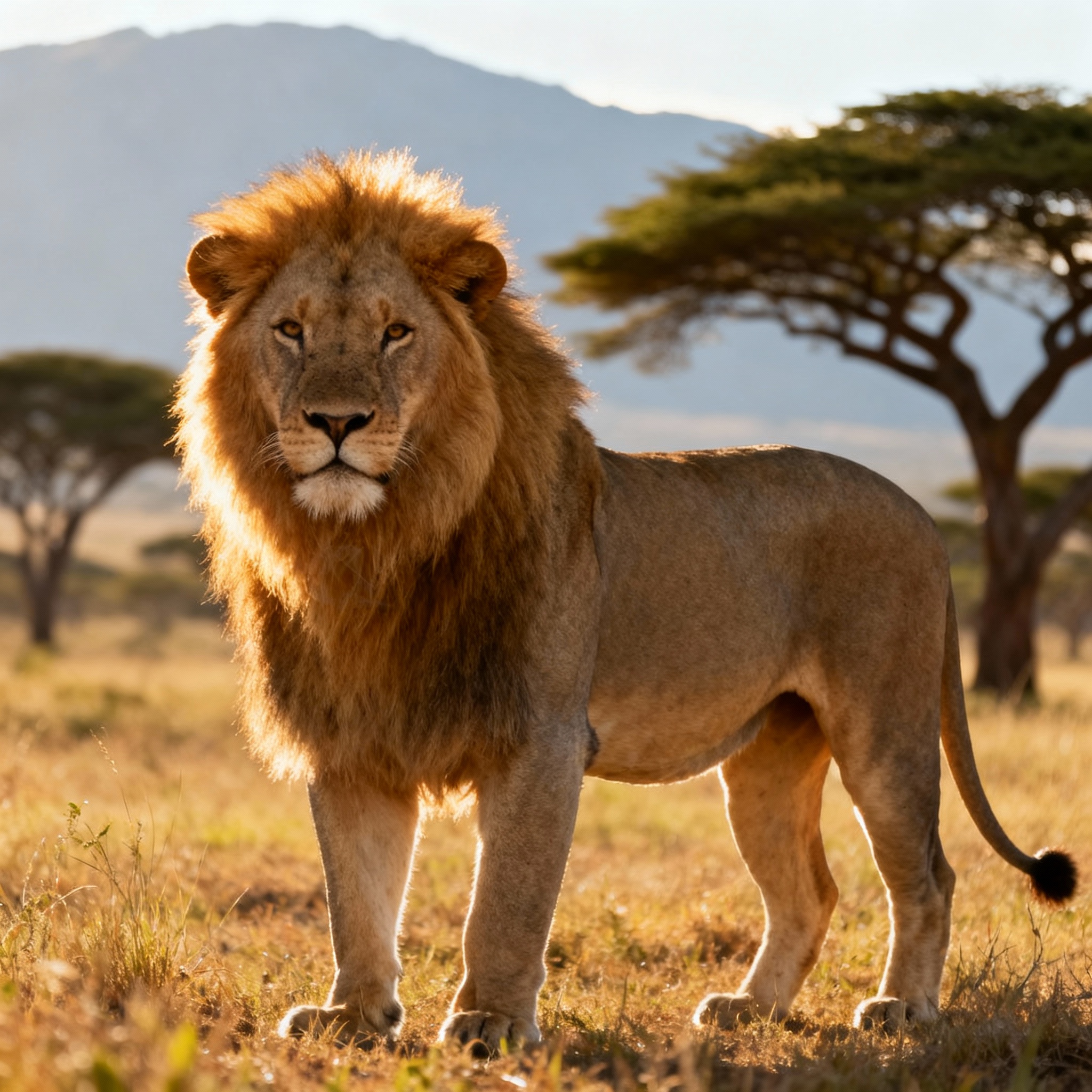
The Canon RF 100-500mm f/4.5-7.1L IS USM has quickly become one of the most sought-after telephoto zoom lenses for wildlife photographers using Canon’s mirrorless R-system cameras. This versatile super-telephoto lens promises professional-grade performance in a relatively compact package, making it an attractive alternative to much heavier and more expensive prime telephoto lenses.
After extensive field testing across various wildlife photography scenarios, from bird photography to safari adventures, I’m ready to share my comprehensive findings on this remarkable lens. Whether you’re considering upgrading from a DSLR telephoto or adding serious reach to your RF lens collection, this review will help you understand exactly what the RF 100-500mm brings to the table.
Technical Specifications
| Specification | Details |
|---|---|
| Focal Length | 100-500mm |
| Maximum Aperture | f/4.5-7.1 |
| Minimum Aperture | f/32-45 |
| Lens Construction | 20 elements in 12 groups |
| Special Elements | 1 fluorite, 2 UD elements |
| Image Stabilization | 5 stops (up to 6 with coordinated IS) |
| Minimum Focus Distance | 0.9m (2.95 ft) |
| Maximum Magnification | 0.33x |
| Filter Thread | 77mm |
| Dimensions | 93.8 x 207.6mm |
| Weight | 1,370g (3.02 lbs) |
| Weather Sealing | Yes |
| Mount | Canon RF |
Build Quality and Design
The RF 100-500mm feels every bit the professional L-series lens it claims to be. Canon has struck an impressive balance between durability and portability, creating a lens that’s robust enough for demanding field conditions while remaining manageable for extended shooting sessions.
Construction and Materials
The lens barrel features Canon’s signature off-white L-series finish with weather sealing throughout. The construction feels solid without being unnecessarily heavy – a crucial consideration when you’re tracking birds for hours or carrying gear on wildlife photography expeditions. The 1,370-gram weight is substantial but reasonable for a 500mm telephoto, especially when compared to traditional DSLR alternatives.
The weather sealing has proven reliable in my testing, handling light rain and dusty conditions without issue. The front element features Canon’s fluorine coating, which makes cleaning easier and provides additional protection against the elements.
Ergonomics and Controls
Canon has thoughtfully designed the control layout for real-world use. The zoom ring operates smoothly throughout its range, with just the right amount of resistance to prevent accidental focal length changes. The focus ring, while narrow, provides adequate tactile feedback for manual focus adjustments.
The lens features three customizable control rings and switches:
- Focus limiter switch with three positions (0.9m-3m, 3m-∞, and full range)
- Image stabilization switch with four modes (IS1, IS2, IS3, and OFF)
- Custom function buttons that can be programmed through the camera body
One particularly useful feature is the tripod collar, which rotates smoothly and locks securely. The collar is removable for handheld shooting, saving additional weight when portability is paramount.
Optical Performance
Sharpness Analysis
The RF 100-500mm delivers exceptional sharpness across its zoom range, though performance does vary depending on focal length and aperture settings.
Wide Open Performance: At 100mm f/4.5, the lens is impressively sharp from center to corner, with only minor softness in the extreme corners that’s easily correctable in post-processing. At 500mm f/7.1, center sharpness remains excellent, though there’s a slight decrease in corner performance – typical for telephoto zooms at their longest focal length.
Optimal Aperture Range: The sweet spot for maximum sharpness occurs around f/8-f/11 at 500mm, where the lens produces tack-sharp results suitable for large prints. At shorter focal lengths, the lens maintains excellent sharpness even when shot wide open, making it versatile for various lighting conditions.
Edge Performance: While center sharpness is consistently excellent, edge sharpness does decrease at 500mm, particularly when shooting wide open. However, since most wildlife photography focuses on subjects that don’t extend to frame edges, this characteristic rarely impacts real-world shooting.
Chromatic Aberration Control
Canon’s use of fluorite and UD (Ultra-low Dispersion) elements pays dividends in chromatic aberration control. Longitudinal chromatic aberration is well-controlled throughout the zoom range, though some lateral CA is visible in high-contrast edges, particularly at 500mm. Fortunately, this is easily correctable in modern RAW processing software.
Distortion Characteristics
Barrel distortion is minimal at 100mm and virtually non-existent at longer focal lengths. The lens produces naturally rectilinear images that require little to no correction, which is excellent for wildlife photographers who need accurate subject representation.
Autofocus Performance
Perhaps the most critical aspect for wildlife photography is autofocus performance, and the RF 100-500mm excels in this area.
Speed and Accuracy
The Nano USM (Ultrasonic Motor) delivers rapid and nearly silent autofocus operation. Initial focus acquisition is impressively fast, even in challenging lighting conditions. The lens consistently locks onto subjects quickly, making it excellent for capturing birds in flight or other fast-moving wildlife.
Bird in Flight Performance: During extensive testing with various bird species, the AF system demonstrated remarkable tracking capabilities. The combination of the lens’s AF motor and Canon R-series bodies’ advanced subject detection creates a formidable wildlife photography system.
Focus Breathing and Hunting
Focus breathing is minimal throughout the zoom range – an important consideration for both photography and video work. The lens rarely exhibits focus hunting, even in low-light conditions, thanks to its large maximum aperture at shorter focal lengths and sophisticated AF algorithms.
Manual Focus Override
The electronic manual focus ring provides smooth, precise control when manual focusing is necessary. The focus-by-wire system feels natural and responsive, though some photographers may prefer the mechanical feel of traditional manual focus rings.
Image Stabilization
The RF 100-500mm’s 5-stop image stabilization system (extending to 6 stops with coordinated IS on compatible camera bodies) is genuinely impressive and game-changing for handheld telephoto photography.
Real-World IS Performance
In practical use, I consistently achieved sharp handheld shots at shutter speeds that would have been impossible with non-stabilized lenses. At 500mm, I regularly captured sharp images at 1/125s and occasionally even slower – performance that extends golden hour shooting opportunities significantly.
IS Mode Options
The three IS modes cater to different shooting scenarios:
- IS Mode 1: General-purpose stabilization for static subjects
- IS Mode 2: Optimized for panning with moving subjects
- IS Mode 3: Activates only during exposure for the most natural viewfinder experience
Mode 2 deserves special mention for its effectiveness during panning shots, providing smooth tracking while maintaining horizontal stabilization.
Bokeh Quality
For a variable aperture zoom lens, the RF 100-500mm produces surprisingly pleasing bokeh characteristics that enhance subject isolation – crucial for wildlife photography.
Out-of-Focus Rendering
The 9-blade circular aperture creates smooth, circular bokeh highlights that remain pleasant even when not perfectly circular. Background blur quality is generally smooth and creamy, particularly at longer focal lengths where the shallow depth of field naturally aids subject isolation.
Bokeh Across the Zoom Range
Bokeh quality improves as you zoom toward 500mm, where the combination of focal length and aperture creates more pronounced background separation. At 100mm, bokeh is adequate but not exceptional – typical for this focal length range.
Busy Background Handling
One of the lens’s strengths is its ability to render busy backgrounds (common in wildlife photography) into smooth, non-distracting blur. This characteristic is particularly valuable when photographing subjects against cluttered forest backgrounds or urban environments.
Real-World Wildlife Photography Scenarios
Bird Photography
The RF 100-500mm truly shines in bird photography applications. The combination of reach, image stabilization, and fast autofocus makes it ideal for both perched and in-flight subjects.
Perched Birds: The lens’s excellent sharpness and IS system allow for handheld shooting in various lighting conditions. The minimum focus distance of 0.9m provides good magnification for smaller songbirds, while the 500mm reach keeps you at a respectful distance from more skittish species.
Birds in Flight: The fast, accurate autofocus combined with effective image stabilization makes flight photography achievable even for intermediate photographers. The lens tracks moving subjects well, and the IS system helps maintain sharp images even with less-than-perfect panning technique.
Safari and Large Wildlife
While 500mm might seem limiting for African safari photography compared to longer primes, the zoom flexibility often proves more valuable than maximum reach.
The ability to quickly zoom from 100mm for environmental shots to 500mm for tight portraits without changing lenses is invaluable when wildlife behavior changes rapidly. The lens’s build quality and weather sealing provide confidence in dusty, challenging conditions.
Nature and Landscape Details
Beyond traditional wildlife subjects, the RF 100-500mm excels at isolating natural details – flowering branches, distant mountain peaks, or architectural elements. The zoom range provides creative flexibility that fixed focal length lenses cannot match.
Comparison with Alternatives
Vs. Canon RF 70-200mm f/2.8L IS USM
The Canon RF 70-200mm f/2.8L IS USM offers a faster maximum aperture and slightly better build quality, but the 100-500mm’s additional reach often proves more valuable for wildlife photography. The 70-200mm is better suited for sports and portrait work where the faster aperture matters more than maximum focal length.
Vs. Canon EF 100-400mm f/4.5-5.6L IS USM II
Compared to the popular EF 100-400mm (with adapter), the RF 100-500mm offers:
- 100mm additional reach
- Superior image stabilization
- Better weather sealing
- Native RF mount advantages
- Slightly better sharpness at equivalent focal lengths
The trade-offs include increased size, weight, and cost, but for serious wildlife photography, the advantages typically outweigh these considerations.
Pros and Cons
Strengths
- Exceptional sharpness throughout zoom range
- Highly effective 5-stop image stabilization
- Fast, accurate autofocus performance
- Excellent build quality and weather sealing
- Useful zoom range for wildlife photography
- Good bokeh quality for a variable aperture zoom
- Smooth, intuitive controls
Limitations
- Variable aperture limits low-light performance
- Significant size and weight increase over shorter telephoto zooms
- Some edge softness at 500mm f/7.1
- Premium L-series pricing
- Minor chromatic aberration at extreme focal lengths
Practical Tips for Maximum Performance
Optimal Camera Settings
- Use servo/continuous AF with subject tracking for moving wildlife
- Enable coordinated IS for maximum stabilization effectiveness
- Set custom functions for frequently used controls
- Use back-button focus for better AF control
Field Techniques
- Support the lens properly – use your left hand under the lens barrel, not the camera body
- Engage the focus limiter when shooting subjects at known distances
- Practice smooth panning technique to maximize IS Mode 2 effectiveness
- Consider using a monopod for extended shooting sessions
Post-Processing Considerations
- Apply lens corrections for chromatic aberration in RAW processors
- Use noise reduction judiciously – the lens’s sharpness can accentuate noise
- Take advantage of the excellent detail rendition for large prints
Conclusion and Recommendations
The Canon RF 100-500mm f/4.5-7.1L IS USM represents a compelling option for wildlife photographers seeking professional performance without the bulk and expense of super-telephoto prime lenses. Its combination of excellent optical quality, effective image stabilization, and fast autofocus creates a versatile tool capable of handling diverse wildlife photography challenges.
Who Should Buy This Lens:
- Wildlife photographers prioritizing versatility over maximum aperture
- Photographers upgrading from APS-C telephoto systems
- Travel photographers needing serious reach in a manageable package
- Content creators requiring both photo and video capabilities
Who Might Consider Alternatives:
- Photographers primarily working in low-light conditions (consider faster primes)
- Those prioritizing absolute minimum weight and size
- Budget-conscious photographers (consider the RF 70-200mm or adapted EF lenses)
- Photographers needing reach beyond 500mm regularly
The RF 100-500mm succeeds in democratizing super-telephoto photography, offering professional-grade performance in a package that doesn’t require superhuman strength to carry or astronomical budgets to acquire. While it may not match the absolute image quality of Canon’s large-aperture telephoto primes, it provides 90% of the performance at a fraction of the size, weight, and cost.
For wildlife photographers using Canon’s R-system cameras, the RF 100-500mm represents an excellent investment that will serve reliably across diverse shooting scenarios. Its combination of optical excellence, practical features, and robust construction makes it a worthy addition to any serious nature photographer’s kit.
The lens delivers on Canon’s promise of bringing L-series quality to the RF mount while taking advantage of the system’s electronic communication and compact form factor. If you’re serious about wildlife photography and seeking a versatile telephoto solution, the RF 100-500mm deserves strong consideration as your next lens investment.
Related Tags
Looking for the Best Camera Deals?
Check out our latest buying guides and comparison articles to find the perfect camera for your needs.
Browse Buying Guides