
Nikon Z8 vs Sony A7R V: Ultimate High-Res Camera Battle
Compare Nikon Z8 vs Sony A7R V specs, image quality, autofocus, and performance. Which high-resolution mirrorless camera wins in 2024?
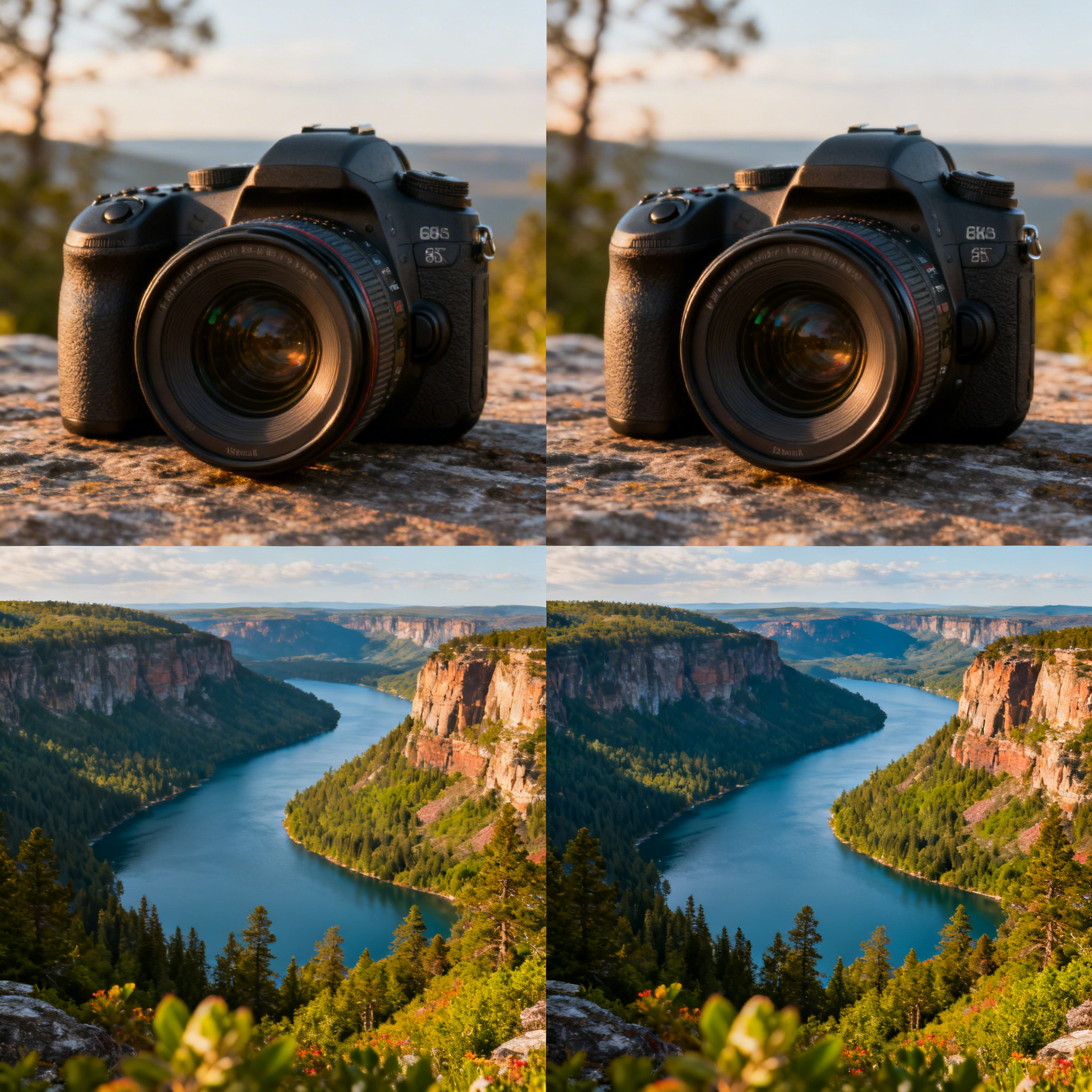
The high-resolution camera market has reached new heights with two exceptional mirrorless cameras leading the charge: the Nikon Z8 and the Sony A7R V. Both cameras represent the pinnacle of their respective manufacturers’ engineering prowess, offering photographers unprecedented image quality and advanced features. In this comprehensive comparison, we’ll dive deep into what makes each camera unique and help you determine which one deserves a place in your camera bag.
Overview: Two Titans of High-Resolution Photography
The Nikon Z8 and Sony A7R V both cater to photographers who demand exceptional detail and versatility. The Z8 essentially packages the DNA of Nikon’s flagship Z9 into a more compact body, while the A7R V builds upon Sony’s proven A7R lineage with significant improvements in resolution, autofocus, and video capabilities.
These cameras aren’t just about megapixels – they’re complete imaging systems designed for professionals and serious enthusiasts who need reliability, speed, and image quality that can stand up to the most demanding situations.
Technical Specifications Comparison
| Feature | Nikon Z8 | Sony A7R V |
|---|---|---|
| Sensor | 45.7MP BSI CMOS | 61MP BSI CMOS |
| Image Processor | EXPEED 7 | BIONZ XR |
| ISO Range | 64-25,600 (exp. 32-102,400) | 100-32,000 (exp. 50-102,400) |
| Autofocus Points | 493 phase-detection | 693 phase-detection |
| Max Burst Rate | 20 fps (mechanical), 120 fps (electronic) | 10 fps (mechanical), 10 fps (electronic) |
| Video Resolution | 8K/60p, 4K/120p | 8K/24p, 4K/60p |
| In-Body Stabilization | 5-axis, up to 6 stops | 5-axis, up to 8 stops |
| EVF Resolution | 3.69M dots | 9.44M dots |
| LCD Screen | 3.2” tilting touchscreen | 3.2” 4-axis multi-angle touchscreen |
| Battery Life | 340 shots (CIPA) | 530 shots (CIPA) |
| Weather Sealing | Yes | Yes |
| Memory Cards | Dual CFexpress Type B/XQD + SD | Dual CFexpress Type A + SD |
| Weight | 910g (body only) | 723g (body only) |
| Launch Price | $3,996 | $3,898 |
Image Quality and Sensor Performance
Resolution and Detail
The Sony A7R V takes the lead in pure resolution with its 61-megapixel sensor, offering approximately 33% more pixels than the Z8’s 45.7-megapixel sensor. This translates to more detailed images and greater cropping flexibility, making it particularly appealing for landscape photographers, architectural shooters, and anyone who regularly creates large prints.
However, the Nikon Z8’s sensor shouldn’t be underestimated. The slightly lower resolution often means better low-light performance and more manageable file sizes, while still providing exceptional detail that satisfies most professional needs.
Dynamic Range and Color Science
Both cameras excel in dynamic range, but they approach color reproduction differently. The Z8 delivers Nikon’s renowned color science, which tends to produce more natural skin tones and pleasing out-of-camera colors. Many photographers find Nikon’s colors require less post-processing work.
The A7R V offers excellent dynamic range with Sony’s signature color profile, which some find slightly more saturated and contrasty straight out of camera. Sony’s extensive picture profile options, including S-Log3 for video work, provide more flexibility for creators who prefer to grade their footage extensively.
High ISO Performance
Despite having fewer megapixels, the Z8 doesn’t necessarily outperform the A7R V at high ISOs as dramatically as you might expect. Both cameras handle noise well up to ISO 6400, with usable results extending to ISO 12800 and beyond. The Z8 shows a slight advantage in noise control at extreme ISOs, but the difference is marginal in real-world shooting scenarios.
Autofocus and Performance
Autofocus Speed and Accuracy
The Nikon Z8 brings the same advanced autofocus system found in the Z9, featuring 493 focus points and sophisticated subject detection for people, animals, birds, cars, motorcycles, bicycles, trains, and planes. The system is remarkably sticky and accurate, particularly excelling in challenging lighting conditions.
The Sony A7R V counters with 693 phase-detection points and Sony’s proven Real-time Recognition AF. Sony’s system has been refined over many generations and offers excellent subject tracking, though some users report occasional hunting in very low light situations.
Burst Shooting Capabilities
This is where the Z8 significantly outpaces the A7R V. The Z8 can shoot at 20 fps with the mechanical shutter and an incredible 120 fps with the electronic shutter, making it more versatile for sports and action photography. The A7R V tops out at 10 fps regardless of shutter mode.
The trade-off is that the A7R V’s higher resolution means each frame contains more information, so the slower burst rate might be acceptable for photographers who prioritize detail over rapid-fire shooting.
Video Capabilities
Recording Formats and Quality
The Nikon Z8 clearly wins the video specification battle, offering internal 8K recording at up to 60fps and 4K at up to 120fps. This makes it an excellent hybrid camera for content creators who need slow-motion capabilities and future-proof resolution options.
The A7R V records 8K at 24fps and 4K at up to 60fps, which covers most professional video needs but falls short of the Z8’s more extensive options. However, Sony’s longer track record in video means the A7R V benefits from mature video features and excellent image stabilization during recording.
Video-Specific Features
Both cameras offer professional video features including focus peaking, zebras, and histogram displays. The Z8 includes more advanced video tools like waveform monitors and vector scopes, while the A7R V offers Sony’s comprehensive picture profile system with detailed customization options.
Build Quality and Ergonomics
Physical Design and Handling
The Nikon Z8 feels substantial in hand, with excellent weather sealing and a grip that accommodates larger lenses comfortably. The button layout follows Nikon’s traditional DSLR ergonomics, making it familiar for photographers transitioning from Nikon’s F-mount system.
The Sony A7R V is notably lighter and more compact, which can be advantageous for travel photography and long shooting sessions. Sony’s menu system has improved significantly in recent generations, though some still find Nikon’s interface more intuitive.
Viewfinder and LCD Quality
Sony takes a commanding lead in viewfinder technology with the A7R V’s 9.44-million dot OLED EVF – one of the highest resolution electronic viewfinders available. The image is incredibly sharp and detailed, making manual focusing more precise.
The Z8’s 3.69-million dot EVF is still excellent but can’t match the A7R V’s resolution. However, the Z8’s EVF offers good brightness and color accuracy that satisfies most shooting needs.
Battery Life and Storage
Power Management
Battery life heavily favors the Sony A7R V with a CIPA rating of 530 shots compared to the Z8’s 340 shots. This difference becomes significant during long shooting sessions, particularly when traveling or shooting events where charging opportunities are limited.
Memory Card Options
Both cameras feature dual card slots, but they use different formats. The Z8 uses CFexpress Type B cards (which are faster and more expensive) paired with standard SD cards. The A7R V uses CFexpress Type A cards with SD cards. Type A cards are generally less expensive than Type B, but both systems provide adequate speed for their respective cameras’ needs.
Lens Ecosystem and Compatibility
Native Lens Selection
Sony’s E-mount system has a significant advantage in lens variety, with extensive first-party and third-party options covering virtually every focal length and specialty need. The mature ecosystem includes everything from ultra-wide zooms to super-telephoto primes.
Nikon’s Z-mount system, while newer, has been expanding rapidly. The mount’s larger diameter potentially allows for faster, sharper lens designs, and Nikon has been releasing high-quality native glass consistently. However, the selection is still smaller than Sony’s offerings.
Adapter Performance
Both systems offer excellent compatibility with their respective DSLR lens lineups through official adapters. The Nikon FTZ adapter provides seamless integration with F-mount lenses, while Sony’s LA-EA adapters work well with A-mount glass, though the selection is more limited.
Real-World Usage Scenarios
Portrait Photography
Both cameras excel for portraits, but they serve different needs. The Z8’s excellent color rendition and lower resolution make it ideal for photographers who value efficient workflow and natural skin tones. The A7R V’s higher resolution provides more detail for large prints and extensive retouching flexibility.
Landscape Photography
The Sony A7R V has advantages for landscape work due to its higher resolution and superior image stabilization. The 61-megapixel sensor captures incredible detail in expansive vistas, while the 8-stop stabilization system helps ensure sharp images in challenging conditions.
Sports and Action
The Z8 is clearly superior for action photography, with its 20fps burst rate and advanced subject detection. The autofocus system locks onto subjects reliably and tracks them through complex movements.
Video Production
Content creators who need maximum video flexibility will prefer the Z8’s higher frame rates and more comprehensive video feature set. The ability to shoot 4K at 120fps opens up creative slow-motion possibilities that the A7R V simply cannot match.
Price and Value Proposition
Both cameras launched at similar price points around $3,900, making the decision largely about features rather than cost. The Z8 offers more speed and video capabilities, while the A7R V provides higher resolution and better battery life.
Consider the additional costs of memory cards, with CFexpress Type B cards for the Z8 being more expensive than the Type A cards used by the A7R V.
Recommendations
Choose the Nikon Z8 if:
- You need high-speed burst shooting for sports or action
- Video recording flexibility is important to your workflow
- You prefer Nikon’s color science and ergonomics
- You’re already invested in Nikon’s lens ecosystem
- You shoot subjects that benefit from advanced tracking (wildlife, motorsports)
Choose the Sony A7R V if:
- Maximum resolution is your top priority
- You frequently shoot handheld in low light (thanks to superior stabilization)
- Battery life is crucial for your shooting style
- You want the sharpest possible electronic viewfinder
- Compact size and weight matter for your photography
Conclusion
Both the Nikon Z8 and Sony A7R V represent outstanding achievements in high-resolution camera technology. Your choice ultimately depends on prioritizing either the Z8’s speed and video capabilities or the A7R V’s resolution and refinement.
The Z8 is the better choice for photographers who need a versatile tool capable of handling any situation, from fast action to detailed video work. Its robust feature set and familiar Nikon ergonomics make it an excellent upgrade path for existing Nikon users.
The A7R V excels as a precision instrument for photographers who prioritize image quality above all else. Its exceptional resolution, combined with excellent stabilization and outstanding battery life, makes it ideal for methodical shooting styles where every frame counts.
Neither camera will disappoint serious photographers, but understanding your specific needs and shooting style will guide you toward the right choice. Both represent significant investments that will serve photographers well for years to come, delivering professional-grade results that justify their premium pricing.
Related Tags
Looking for the Best Camera Deals?
Check out our latest buying guides and comparison articles to find the perfect camera for your needs.
Browse Buying Guides