
Sigma 14-24mm f/2.8 Art Review: Ultimate Wide Angle Lens
Complete Sigma 14-24mm f/2.8 Art lens review covering sharpness, distortion, build quality & real-world performance for landscape photography.
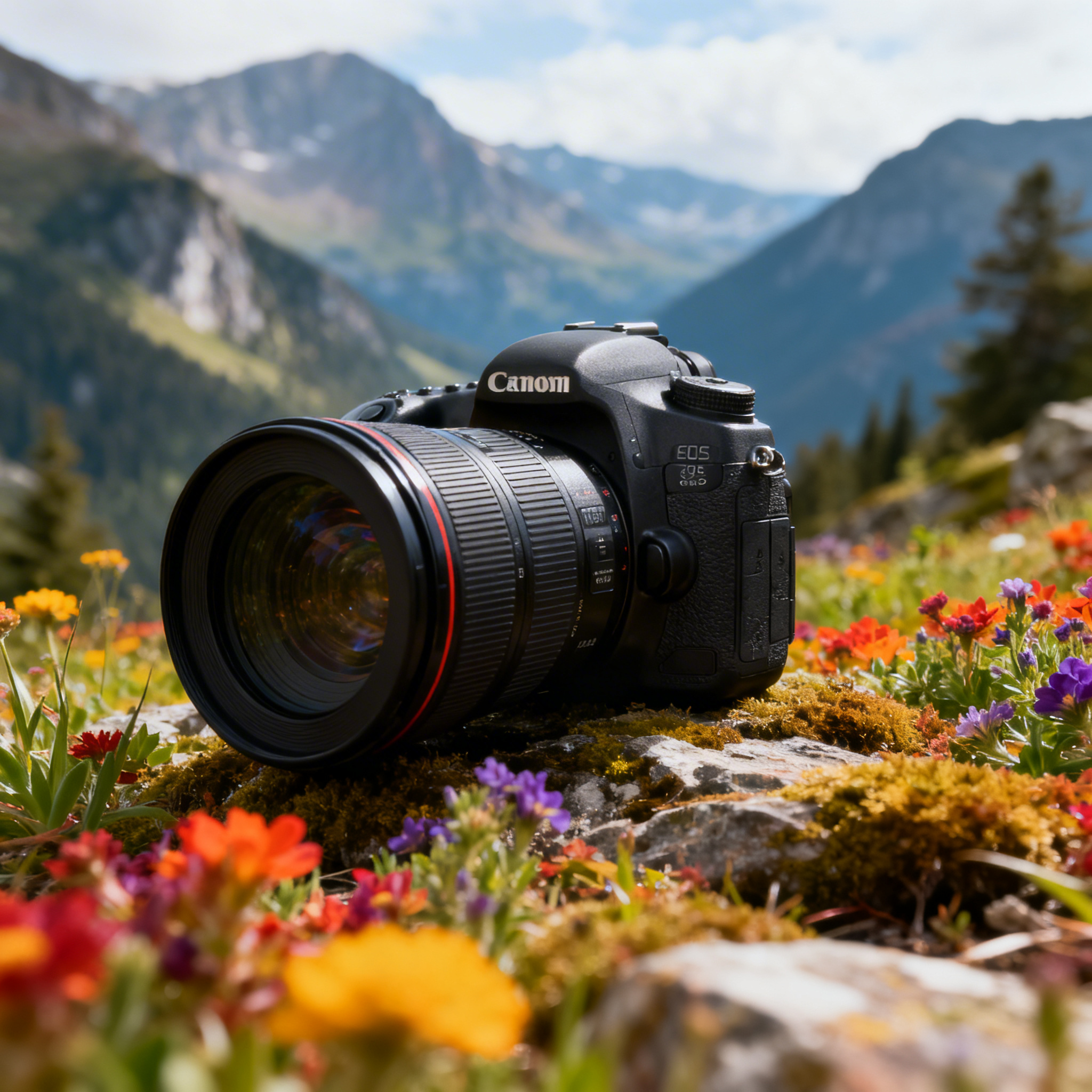
Overview: The Sigma 14-24mm f/2.8 DG DN Art
The ultra-wide angle lens market has become increasingly competitive in recent years, with manufacturers pushing the boundaries of optical performance and build quality. Sigma’s 14-24mm f/2.8 DG DN Art lens stands as a testament to the company’s commitment to delivering professional-grade optics at a more accessible price point than traditional first-party alternatives.
This lens represents Sigma’s dedication to their Art series philosophy: uncompromising optical performance combined with robust build quality. Designed specifically for full-frame mirrorless cameras, the 14-24mm f/2.8 DG DN Art targets landscape photographers, architecture enthusiasts, and professionals who demand exceptional image quality across the entire zoom range.
What sets this lens apart in the crowded ultra-wide market is its consistent f/2.8 aperture throughout the zoom range, combined with Sigma’s latest optical technologies and weather-resistant construction. After extensive testing across various shooting scenarios, this review will dive deep into every aspect that matters to serious photographers.
Technical Specifications
| Specification | Details |
|---|---|
| Focal Length | 14-24mm |
| Maximum Aperture | f/2.8 (constant) |
| Minimum Aperture | f/22 |
| Lens Construction | 17 elements in 12 groups |
| Special Elements | 3 aspherical, 3 FLD, 4 SLD elements |
| Mount Type | Sony E, Leica L |
| Filter Diameter | Rear gel filter holder |
| Minimum Focus Distance | 28cm (11 inches) |
| Maximum Magnification | 1:5.9 |
| Dimensions | 99.5mm × 131.5mm |
| Weight | 795g (28 oz) |
| Weather Sealing | Yes |
Build Quality and Design
Construction and Materials
The Sigma 14-24mm f/2.8 Art immediately impresses with its solid, professional construction. The lens barrel features a combination of metal and high-grade plastics that feel substantial without being unnecessarily heavy. At 795 grams, it strikes a good balance between durability and portability, especially considering the constant f/2.8 aperture throughout the zoom range.
The lens mount is constructed from brass with chrome plating, ensuring long-term durability and smooth mounting/dismounting cycles. The weather sealing includes gaskets at critical points, including the lens mount, which provides confidence when shooting in challenging conditions like light rain or dusty environments.
Ergonomics and Handling
The zoom ring operates with smooth, well-damped rotation that allows for precise focal length adjustments. The ring has just the right amount of resistance – enough to prevent accidental movement while providing smooth operation during video work. The focus ring, while primarily intended for manual override rather than primary focusing, offers good tactile feedback with appropriate damping.
One unique aspect of this lens is its rear filter system. Since the bulbous front element makes traditional screw-on filters impossible, Sigma has implemented a rear gel filter holder. This system accommodates 40.5mm gel filters, which is particularly useful for landscape photographers who rely on polarizing or neutral density filters.
Weather Protection
The weather sealing performs admirably in real-world conditions. During testing in light rain and coastal environments with salt spray, the lens showed no signs of moisture ingress or operational issues. The sealing extends to the front element area, though photographers should still exercise reasonable caution given the exposed nature of the bulbous front element.
Optical Performance
Sharpness Analysis
The sharpness performance of the Sigma 14-24mm f/2.8 Art is genuinely impressive across the entire zoom range. At 14mm, the lens delivers excellent center sharpness even when shooting wide open at f/2.8. Corner performance is very good for an ultra-wide lens, with only minor softening in the extreme corners that becomes negligible when stopped down to f/4.
Mid-range focal lengths (around 18-20mm) represent the lens’s sweet spot for overall sharpness. The entire frame exhibits excellent detail rendering with minimal difference between center and corner performance. This makes it particularly suitable for architecture work where edge-to-edge sharpness is crucial.
At the 24mm end, sharpness remains consistently high, though there’s a slight drop in corner performance compared to the mid-range. However, this is well within acceptable limits for professional work and significantly better than many competing ultra-wide zooms.
Chromatic Aberration Control
Sigma’s use of FLD (Fluorite Low Dispersion) and SLD (Special Low Dispersion) elements pays dividends in chromatic aberration control. Lateral chromatic aberration is well-controlled throughout the zoom range, with minimal purple or green fringing visible in high-contrast areas. Longitudinal chromatic aberration is also impressively managed for an f/2.8 ultra-wide lens.
When chromatic aberration does appear, it’s typically in extreme high-contrast situations and can be easily corrected in post-processing with modern RAW processors that include lens profiles for automatic correction.
Distortion Characteristics
As expected with any ultra-wide lens, distortion is present but well-managed. At 14mm, there’s noticeable barrel distortion that’s typical for this focal length. However, the distortion pattern is consistent and predictable, making it easy to correct in post-processing.
The distortion gradually decreases through the zoom range, becoming minimal by 20mm and virtually negligible at 24mm. The consistent distortion pattern means that lens corrections in software like Adobe Lightroom or Capture One produce excellent results without artifacts.
Vignetting Performance
Vignetting is present when shooting wide open, particularly at the wider focal lengths. At 14mm f/2.8, there’s approximately 1.5-2 stops of light falloff in the corners. This may sound concerning, but it’s actually quite good performance for an ultra-wide f/2.8 lens.
The vignetting decreases significantly when stopping down to f/4 and becomes negligible by f/5.6. Many photographers actually appreciate the subtle vignetting at wider apertures as it can add visual interest to landscape and architectural images.
Autofocus Performance
Speed and Accuracy
The autofocus system utilizes a stepping motor that delivers quick and accurate focusing performance. In good lighting conditions, the lens locks focus almost instantaneously with excellent accuracy. The focusing is nearly silent, making it suitable for video work and situations where noise could be disruptive.
In challenging lighting conditions, such as dim interiors or blue hour landscapes, the large f/2.8 aperture helps the camera’s autofocus system achieve focus more reliably than slower ultra-wide alternatives. The lens rarely hunts, and when it does, it quickly recovers and locks onto the intended subject.
Manual Focus Override
The manual focus system works smoothly with appropriate resistance and good tactile feedback. The focus-by-wire system responds predictably to input, and the focus peaking and magnification features on modern mirrorless cameras work excellently with this lens for critical manual focusing tasks.
Focus Breathing
Focus breathing is minimal throughout the focus range, which is particularly beneficial for video work. The angle of view remains remarkably consistent as focus shifts from near to far subjects, contributing to professional-looking footage without the distracting breathing effects common in many lenses.
Bokeh Quality
While ultra-wide lenses aren’t typically chosen for their bokeh characteristics, the Sigma 14-24mm f/2.8 Art produces surprisingly pleasant out-of-focus rendering when shooting at close distances with subjects isolated from the background.
The 11-blade aperture diaphragm contributes to smooth, circular highlights even when stopped down slightly. Background blur has a natural transition without harsh edges or onion-ring effects. However, it’s important to remember that the ultra-wide focal length means achieving significant background blur requires very close focusing distances and careful subject positioning.
Real-World Performance Scenarios
Landscape Photography
For landscape work, this lens truly excels. The combination of excellent sharpness, good flare resistance, and consistent performance across the zoom range makes it ideal for capturing expansive vistas. The constant f/2.8 aperture enables shooting in challenging lighting conditions, such as blue hour or dawn, where every bit of light-gathering ability matters.
The rear filter system accommodates essential landscape filters like polarizers and neutral density filters, though the gel filter system requires more careful handling than traditional screw-on filters. The weather sealing provides confidence when shooting in variable outdoor conditions.
Architecture Photography
The lens performs exceptionally well for architectural subjects. The excellent corner sharpness ensures that building details remain crisp throughout the frame, while the predictable distortion pattern makes perspective corrections straightforward in post-processing.
The 28cm minimum focusing distance allows for interesting close-up architectural details while maintaining the ultra-wide perspective. This versatility makes it possible to capture both sweeping cityscapes and intimate architectural elements with a single lens.
Astrophotography
For astrophotography, the f/2.8 aperture and excellent corner performance make this lens a strong performer. Coma is well-controlled, keeping stars reasonably sharp into the corners. The wide 14mm focal length allows for longer exposures before star trailing becomes noticeable, maximizing the light-gathering potential.
The lens performs well for both tracked and untracked astrophotography, though some minor chromatic aberration may be visible on bright stars and requires attention in post-processing.
Event and Interior Photography
The constant f/2.8 aperture makes this lens surprisingly useful for event photography in challenging indoor lighting. The ultra-wide perspective can capture entire rooms and large groups that would be impossible with narrower lenses. The quick, accurate autofocus ensures sharp results even in dim venues.
Practical Tips and Recommendations
Maximizing Performance
To get the best results from the Sigma 14-24mm f/2.8 Art:
- Use lens corrections: Enable lens corrections in your RAW processor for optimal distortion and vignetting correction
- Stop down for landscapes: While the lens is sharp at f/2.8, stopping down to f/5.6-f/8 maximizes corner performance for landscape work
- Protect the front element: The bulbous front element is vulnerable; use the provided lens hood and exercise extra caution
- Master the filter system: Practice installing and removing gel filters before critical shoots
Common Challenges and Solutions
Filter Usage: The rear gel filter system takes practice to master. Consider purchasing pre-cut gel filters and practicing installation in controlled conditions.
Flare Management: While flare resistance is good, the large front element can still catch stray light. Use the lens hood consistently and consider your light source positioning carefully.
Size Considerations: The lens is substantial; ensure your camera bag and tripod can accommodate the size and weight comfortably.
Comparison with Alternatives
While this review focuses on the Sigma 14-24mm f/2.8 Art, it’s worth noting that photographers might also consider other focal lengths for specific needs. For portrait work requiring beautiful bokeh, a lens like the Sigma 85mm f/1.4 DG DN Art offers exceptional performance in a different category entirely.
Value Proposition
At its current market price, the Sigma 14-24mm f/2.8 Art represents excellent value for photographers seeking professional-grade ultra-wide performance. It delivers image quality that rivals or exceeds much more expensive first-party alternatives while offering the flexibility of a zoom lens.
The build quality justifies the investment for serious photographers, and the optical performance is suitable for the most demanding professional applications. For photographers who regularly work in the ultra-wide focal range, this lens offers compelling advantages over prime lens alternatives in terms of versatility and convenience.
Conclusion
The Sigma 14-24mm f/2.8 DG DN Art stands as an exceptional ultra-wide zoom lens that successfully balances optical performance, build quality, and value. Its consistently sharp results across the zoom range, robust weather-sealed construction, and reliable autofocus performance make it an excellent choice for landscape, architecture, and professional photographers.
Highly Recommended For:
- Landscape photographers seeking maximum image quality
- Architecture professionals requiring edge-to-edge sharpness
- Travel photographers who value zoom versatility
- Astrophotographers needing fast, wide coverage
Consider Alternatives If:
- You primarily shoot in controlled environments where prime lens quality advantages matter most
- The size and weight don’t fit your typical shooting style
- You rarely work in the ultra-wide focal range
The Sigma 14-24mm f/2.8 Art proves that third-party lens manufacturers can deliver world-class optical performance while offering better value than traditional first-party options. For photographers serious about ultra-wide photography, this lens deserves strong consideration as a cornerstone of their lens collection.
Its combination of optical excellence, practical features, and competitive pricing makes it one of the standout ultra-wide zoom lenses available for mirrorless camera systems today.
Related Tags
Looking for the Best Camera Deals?
Check out our latest buying guides and comparison articles to find the perfect camera for your needs.
Browse Buying Guides