
My photography is never so difficult and robbed of its joy as when I try too hard to make it “good” (whatever that means) or worse: to make “art.“
The moment I focus my concern on the outcome of what I am making or how it is received by others, my work becomes rigid and self-conscious. Not only does the picture-making become more difficult (and the resulting photographs less infused with life), it all becomes so much less enjoyable, weighed down with my own unrealistic expectations and the imagined expectations of others. I know I’m not the only one who feels this way.
In the moment, it’s hard enough to make technically competent choices and to make those decisions playfully as I work to see what magic might exist between the camera, the scene, and the subject—but near impossible to do that while listening to the monkeys chattering in the back of my brain and telling me that what I’m making isn’t worth the pixels.
I’ve never liked monkeys. I make a living helping others tame their mental monkeys, while mine get routinely out of control, running amok and throwing poo in the hallways of my creative process.
My advice (if not to you then to me) is this: stop trying so hard to make art. Stop worrying about whether it’s good or not. It doesn’t matter.
Here’s how it works: you learn your craft, study the masters, and practice new things. As you do, your skill improves, your tastes change, and what lights you up on the inside evolves. You never have to answer to the monkeys; you don’t have to worry about whether it’s “art” or even “good.” You just have to make something that thrills you. And keep working on the craft. Keep learning.
If you let “good” stop you, you’ll never grow or improve. No one makes good photographs at first.
Want stronger photographs? Make more of them. Ignore the monkeys slapping labels on it.
Something happens when many of us (ok, maybe it’s just me, but keep reading in case it applies) make a picture we like. We start looking around, hoping others like it too. If they like it, then it confirms we made something good. Cue the dopamine. But if not, well, no more dopamine for you. Those happy feelings are replaced with self-doubt, and we second-guess our affection for what we just made, rather than trusting it.
When we lose the thrill of play, we resort to rules. When we doubt the calibration of our own desires and preferences, we look to others to confirm the merit of our work. Rules are reliable, but they’ll keep you moving in circles around the tastes and opinions of others; they won’t pull you forward into who you’re becoming.
But at least you’ll know if your work is “good” or not, right? Well, no. You’ll know that it conforms to what others expect from art or so-called good photography, and if creative efforts are to conform to anything, it should be to one thing only: the contours of your own soul and mind.
Even as I write this, the Craft Police in my mind are getting their panties in a twist. “If everything is good,” I can hear them say, “then nothing is good!” I want excellence in my work as much as the next person. I just don’t need the approval of others or a list of standards or rules to get there, and neither do you.
As you grow in your craft, you will hit important milestones. At some point, unintentionally crooked horizons will become distracting to you, and you’ll stop doing it. Not because it’s a rule, but because you notice them now and you don’t like them. Same with sensor spots and a lack of critical sharpness in areas that really should be sharp. I know Cartier-Bresson said “sharpness is a bourgeois concept,” but he didn’t believe that so strongly that he stopped focusing his lens. When you need it to be sharp, you’ll know because it’ll drive you to distraction when it’s not, and it won’t be for the sake of the rules; it’ll be because you just don’t like the blurry results anymore. If you’re paying attention and you are growing in your craft, you will evolve into excellence.
At some point, you’ll become dissatisfied with repeating yourself, and that dissatisfaction will draw you forward into new efforts. You won’t be trying to make art; you’ll just want something different from your work. And that desire will lead you to play with wider apertures or slower shutter speeds. It might lead you to more spacious compositions or to give more attention to the energy in your frame, not because one result is objectively good and another is not, but because one satisfies you and the other falls flat, which is curious because last year you really resonated with techniques and results that now feel a little less alive to you.
The thing is, in between the realization that the old efforts no longer satisfy and whatever stage comes next, there can be an incredible liminal stage—an in-between place in your growth that is not quite one or the other but is full of play and curiosity and is unencumbered by expectations because you really don’t have any yet for this new creative place you’ve arrived in. It is in this stage—if you don’t overthink it—that you make the discoveries that will be the hallmarks of your new work. It’ll be in this playful exploration that you find the joy that you always get when things are going well, and you love what you think the work is becoming. Not because it’s good, not because it’s art. But because you love it. And maybe you don’t even love the results, but love the effort of trying—and in doing so, you learn what works and what doesn’t, and you try again because you love the trying.
Is there a better way to evaluate what we make? Is there a better reason for pursuing it and doing more of it? I can’t think of any.
I don’t know if what I make is art, or if others will see it that way. I guess it’s a matter of definition, but I like to think it qualifies. From image to image, I don’t even know if it’s any good, whatever that means. But I know when it’s mine. I know when I love it. I know when I have loved making it, and that act of creativity has taken me to new places. And I know that no matter how good I (or the monkeys) judge it to be, my assessment might change in a year or two; it’ll no longer satisfy, and that hunger will push me ever forward to making work that has meaning to me and brings me joy.
I also know that when I start worrying about how good it is, I stiffen up. I become less playful. I make photographs that are less good, less “me,” and less fun to make. The creative spark is easily quenched. If anything, “Is it good?” is a later question, not a camera-in-hand question.
Don’t worry about the art and whether your images are, or aren’t. Pick up the camera and play. Learn something new and incorporate that into your play. See where your ideas lead and make lots of crappy sketch images that lead to unexpected surprises. If your first instinct is to look at the results and either gasp or giggle (or both), let that be enough.
For the Love of the Photograph,
David
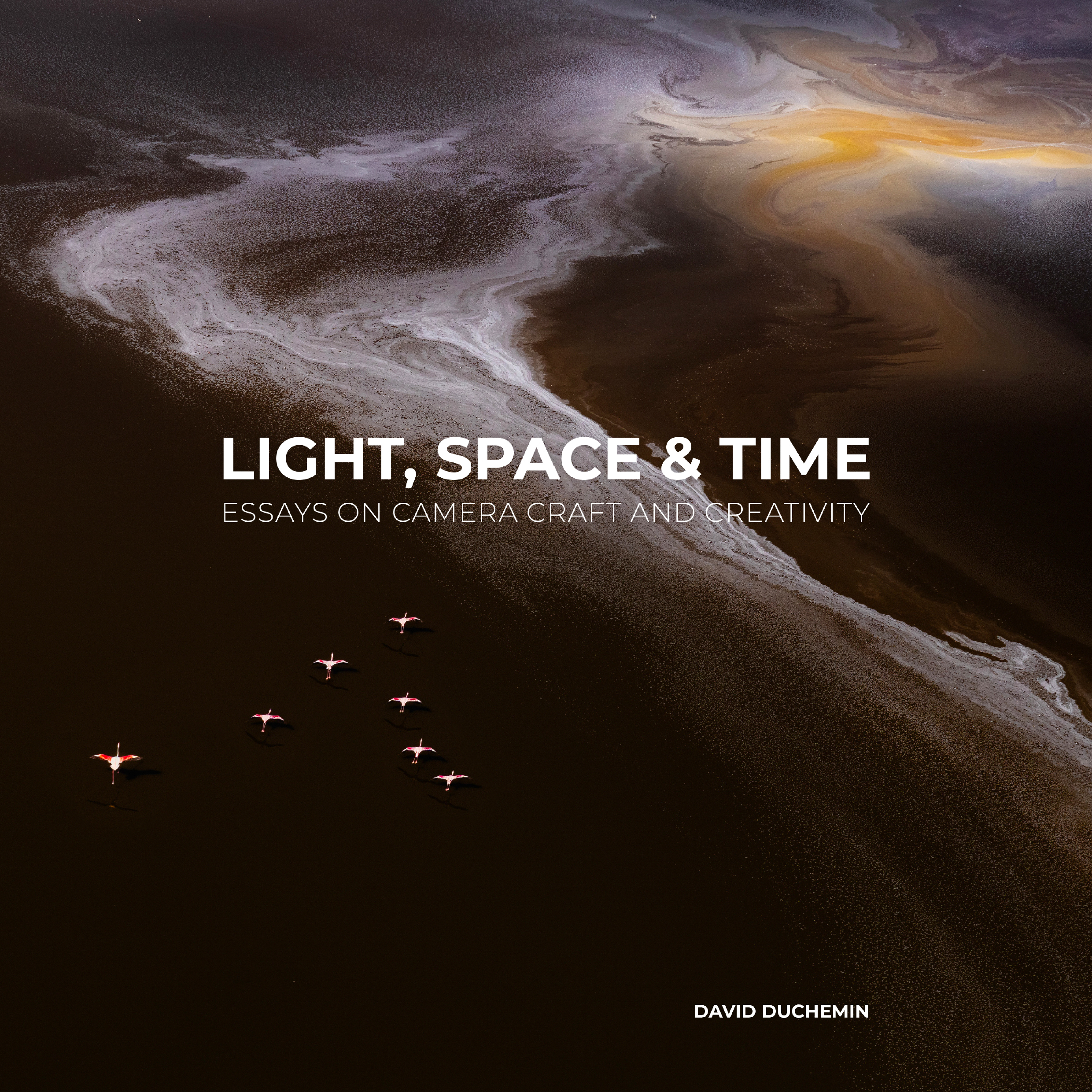
The biggest challenges for most photographers are not technical but creative. They are not so much what goes on in the camera but what goes on in the mind of the person wielding it. Light, Space & Time is a book about thinking and feeling your way through making photographs that are not only good, but truly your own. It would make an amazing gift for the photographer in your life, especially if that’s you. Find out more on Amazon.
